

For contractors working on high-rise buildings, exterior restoration, painting, waterproofing, window projects, and façade repairs, getting workers safely and efficiently to elevated work areas is a critical part of project planning. In many situations, a swing stage scaffold rental provides the access needed without requiring a supported scaffold system to be built from the ground up.
Across Miami, Fort Lauderdale, West Palm Beach, and surrounding South Florida communities, swing stage scaffolding is an important access solution for construction, restoration, maintenance, and repair projects.
But what exactly is a swing stage? When should contractors use one instead of traditional scaffolding? And what should you consider before renting a suspended scaffold?
This guide covers the fundamentals of swing stage scaffolding rentals in South Florida, including common applications, equipment, safety considerations, fall protection, installation, and how to select the right system for your project.
What Is a Swing Stage Scaffold?
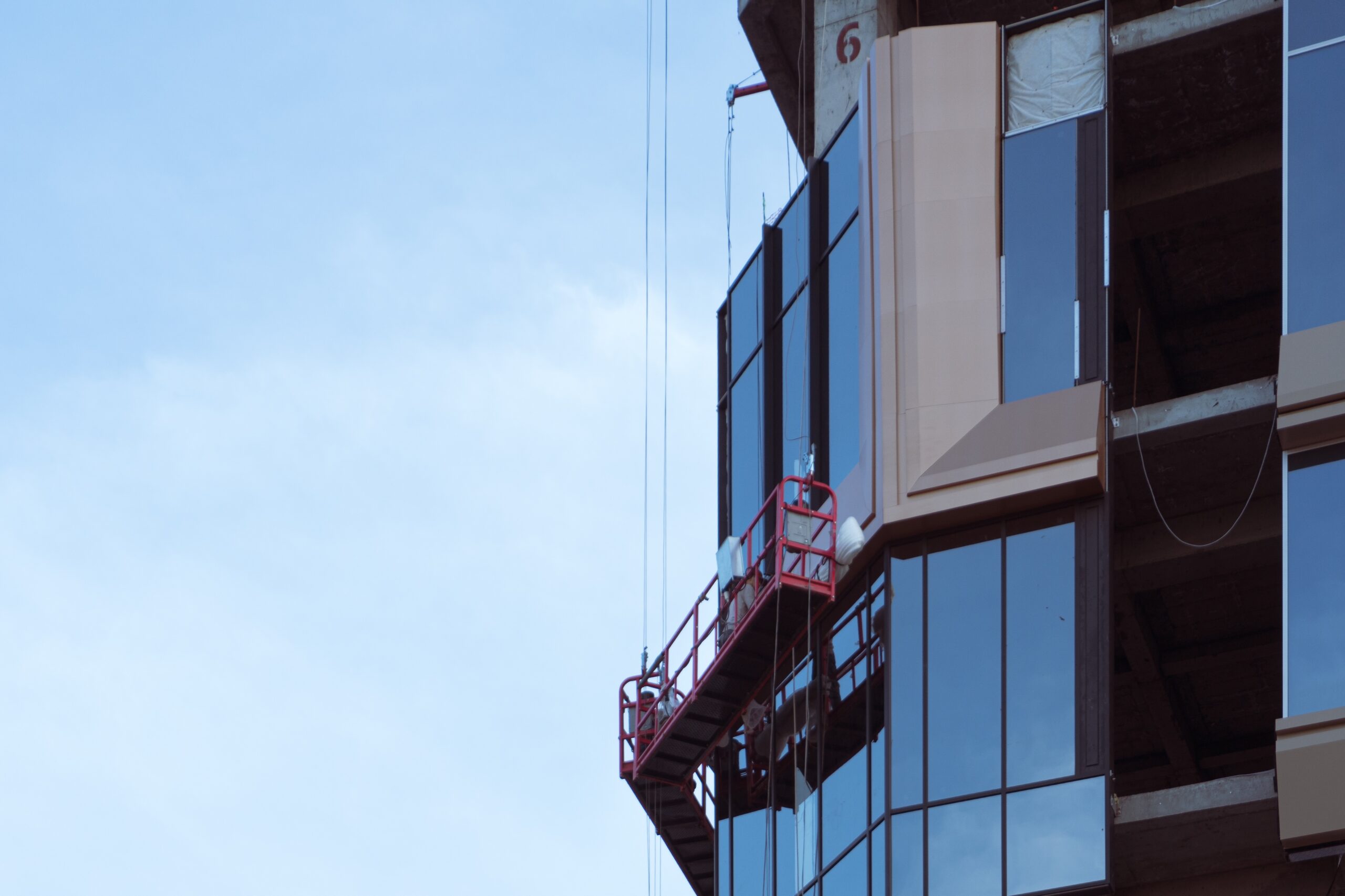
A swing stage scaffold, also called a two-point adjustable suspension scaffold, is a suspended work platform supported by ropes or cables connected near each end of the platform.
Unlike traditional supported scaffolding, which is constructed upward from the ground or another supporting surface, a swing stage is suspended from above. Hoists allow the platform to travel vertically along the exterior of a structure so workers can reach different elevations.
OSHA describes two-point adjustable suspension scaffolds as swing-stage scaffolds and notes that they are commonly associated with skyscraper window washing while also playing an important role in high-rise construction.
This combination of vertical mobility and access makes swing stages particularly useful for work on tall buildings and structures where constructing supported scaffolding across the entire façade may not be practical.
What Are Swing Stages Used For?
Swing stage scaffolding can support many types of exterior construction, restoration, and maintenance work.
Common applications include:
- High-rise building restoration
- Exterior painting
- Stucco installation and repair
- Concrete restoration
- Waterproofing
- Window installation and replacement
- Façade inspection and repair
- Building maintenance
- Exterior cleaning
- Sealant and caulking work
- Masonry repairs
- Condominium and commercial building restoration
The right access system depends on the building, scope of work, required working height, loads, anchorage conditions, project duration, and other jobsite factors.
For South Florida contractors in particular, suspended access can be useful on projects involving condominiums, hotels, office buildings, residential towers, and other multistory structures.
How Does a Swing Stage Scaffold Work?
A typical swing stage system consists of a platform suspended from support equipment located above the work area. Powered hoists move the platform up and down along suspension ropes, allowing workers to position themselves at the required elevation.
Depending on the project, a swing stage system may include various components such as modular work platforms, electric hoists, outrigger beams or other suspension equipment and personal fall arrest equipment.
The exact configuration varies considerably from one project to another. Building height, roof configuration, parapets, structural anchorage points, platform length, required capacity, and the work being performed can all affect the appropriate setup.
That is one reason contractors should avoid treating swing stage rental as simply ordering a platform and a pair of hoists. The complete access system needs to be appropriate for the building and application.
Why Rent Swing Stage Scaffolding?
Purchasing specialized suspended access equipment isn’t always practical, particularly when equipment requirements change from project to project.
Swing stage scaffold rental can give contractors access to the equipment they need for a specific job without committing capital to equipment that may sit unused between projects. Rental also allows contractors to work with a scaffold provider like House of Ladders to determine what equipment is appropriate for the planned application.
What Should Contractors Consider Before Renting a Swing Stage?
Before ordering suspended scaffold equipment, contractors should evaluate more than just building height.
Building and Roof Configuration
The roof and upper structure play an essential role in a suspended scaffold system.
Parapet walls, roof layout, available structural anchorage, obstructions, setbacks, and other building characteristics can influence how the suspension equipment must be configured.
Required Working Height
Contractors should determine the highest and lowest areas crews need to reach.
A project that requires work from the roofline to the lower floors may have different equipment requirements from a project involving only several upper stories.
Platform Size
The amount of working space required depends on the crew, tools, materials, and scope of work.
Longer does not automatically mean better. Platform dimensions and configurations need to remain appropriate for the system and application.
Load Requirements
Workers are only part of the load placed on a scaffold. Tools, equipment, and materials must also be considered.
OSHA requires scaffolds and scaffold components to support their own weight and at least four times their maximum intended load. Additional requirements apply to suspension ropes and support devices. Accurate load planning is therefore essential when selecting and configuring suspended scaffolding.
Power Requirements
Powered swing stage hoists require an appropriate electrical supply. Contractors should determine what power will be available at the jobsite and ensure the equipment configuration is compatible.
Access to the Work Area
Consider how workers will safely enter and exit the platform and how equipment and materials will be moved to the required locations.
Access planning should be addressed before work begins rather than improvised once equipment is installed.
Swing Stage Safety and Fall Protection
Safety is one of the most important considerations when working with suspended scaffolding.
OSHA requires employees working on single-point and two-point adjustable suspension scaffolds to be protected by both a personal fall arrest system and a guardrail system.
Vertical lifelines, when used, must be secured to an appropriate fixed anchorage independent of the scaffold and protected from sharp edges and abrasion. OSHA also places requirements on suspension systems, support devices, tiebacks, platforms, training, and other components of suspended scaffold operations.
Another major consideration in South Florida is weather. Given South Florida’s potential for rapidly changing weather, wind, rain, and thunderstorms, jobsite conditions should always be monitored and evaluated by the appropriate responsible personnel.
OSHA requires employers to ensure employees who perform work while on a scaffold are trained by a person qualified in the subject matter to recognize the hazards associated with the scaffold being used and understand the procedures needed to control or minimize those hazards.
Training can address topics such as electrical hazards, fall hazards, falling-object hazards, proper scaffold use, load capacity, and handling materials on the scaffold.
Why Professional Swing Stage Installation Matters
A swing stage depends on much more than the platform workers stand on.
Suspension equipment, ropes, hoists, tiebacks, anchorage, platform components, and other elements need to function as an integrated system.
Professional scaffold services can help contractors address equipment selection, delivery, setup, and dismantling requirements for the project.
Working with an experienced scaffold provider like HOL also helps identify potential access challenges early, before they create delays at the jobsite.
When discussing swing stage installation services, be prepared to provide information about the building, project scope, required elevations, roof configuration, work area, expected loads, and anticipated project schedule.
Frequently Asked Questions About Swing Stage Scaffold Rentals
What is another name for a swing stage scaffold?
A swing stage is commonly referred to as a two-point adjustable suspension scaffold or suspended scaffold. OSHA uses “two-point (swing stage)” terminology when describing this type of equipment.
What is a swing stage used for?
Swing stages are used to provide vertical access to elevated work areas, particularly on building exteriors. Common applications include painting, waterproofing, window work, façade repairs, concrete restoration, inspections, cleaning, and building maintenance.
Is a swing stage the same as regular scaffolding?
A swing stage is a type of scaffold, but it is suspended from above rather than supported from the ground like conventional frame or system scaffolding.
Can contractors rent swing stage scaffolding?
Yes. Scaffolding rental allows contractors to obtain suspended access equipment for a particular project without purchasing and storing a complete system.
Do workers need fall protection on a swing stage?
Yes. Under OSHA’s construction scaffold requirements, employees on single-point or two-point adjustable suspension scaffolds must be protected by both a personal fall arrest system and a guardrail system.
Can swing stages be used on high-rise buildings?
Swing stages are commonly used for high-rise construction and maintenance. However, the appropriate access system and configuration depend on the building, anchorage, loads, scope of work, and other project-specific conditions.
Can swing stages be used during high winds?
OSHA prohibits work on or from scaffolds during storms or high winds unless a competent person determines that it is safe and the applicable protective requirements are met. Contractors should establish procedures for monitoring weather and stopping work when conditions are unsafe.
Does every building use the same swing stage setup?
No. Building height, roof construction, parapets, anchorage, platform requirements, work locations, loads, and other conditions can change the required setup. Suspended access should be evaluated on a project-by-project basis.
Find Swing Stage Scaffold Rentals in South Florida
Whether you’re planning façade restoration in Miami, exterior repairs in Fort Lauderdale, or building maintenance in West Palm Beach, having the right access equipment can make a major difference in how efficiently your crews can complete the work.
House of Ladders provides scaffolding, scaffold rental, swing stage equipment, fall protection, custom fabrication, and equipment installation services for construction professionals throughout South Florida.
Our team can help you determine the equipment and scaffold services needed based on your project’s requirements. Contact us to learn more.